Startling Commentary
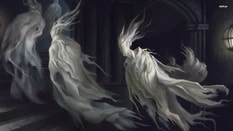
BELIEVING In Ghosts
The fear of death has always haunted us ever since we became conscious of our species and existence. Life after death is a recurring topic in many aspects of our lives. If we die and become ghosts, that means immortality in a certain way. And being immortal sounds like something supernatural, a scene from a sci-fi movie. Turning into a spirit after death would be similar to uncovering the much-desired fountain of youth.
But is there a truth behind this so-called supernatural phenomenon?
Before we move on, let’s say that this article isn’t trying to turn you into a ghost-believer, because that would be pretentious if said out loud. We’re merely trying to point you towards that direction by showing you some unexplained real-life examples.
Let’s dig in.
Near-Death Experiences
Although the scientific explanation exists, these are just short circuits in your brain playing tricks with you (or at least with what’s left of you). Not explained are some other bizarre things going on here. Namely, in a staggering number of cases, people who had near-death experiences on an operating table were able to detach themselves from their body and look around. After they had woken up, they were able to recount every detail about the people in the waiting room, what they were doing, etc. They even knew what the doctors had been talking about while performing the surgery. Since the brain is clinically dead at that point, it is odd that it can memorize things so well and even more curious – that it can travel around.
That’s more than just brain playing tricks with you.
Haunted Places
Although this one seems worn out, instances of weird things happening in houses are real, with numerous eye-witnesses of poltergeists and objects moving. Admittedly, not all of the people are crazy? This phenomenon occurs independently all across the globe, so it’s not something one could attribute to a Hollywood trend.
It’s usual to connect these sightings to some gruesome deaths and troubled souls who have been molested or mistreated during life. For example, some say former slaves inhabit the Boone Hall Plantation in Charleston.
Still More to Learn
Scientific evidence for ghosts is unclear. In order not to spread panic, scientists and medical experts tend to disprove anything ‘supernatural’. But it’s only recently that we’ve started studying these phenomena. There’s a lot more to learn, and who knows what we’ll uncover.
THE MYSTERY OF DREAMING
Dreams often feel like another form or reality we’re experiencing. They are sometimes difficult to explain or even to remember, but we know it felt so real and vivid while we were dreaming it. Dreaming is a trance-like state during which our body and mind rest, or so it should be. Our brain doesn’t seem to sleep, though.
But What are Dreams Exactly?
There are hundreds of different and competing theories about what dreams are. Roughly speaking, dreams are sensations, thoughts, images, and fantasies we experience while we’re asleep. According to Sigmund Freud, dreams are our window into the realm of the unconscious. And the unconscious is dozens and even hundreds of times more prominent and more powerful than our conscious.
Dreams often feel like another form or reality we’re experiencing. They are sometimes difficult to explain or even to remember, but we know it felt so real and vivid while we were dreaming it. Dreaming is a trance-like state during which our body and mind rest, or so it should be. Our brain doesn’t seem to sleep, though.
But what are dreams exactly?
There are hundreds of different and competing theories about what dreams are. Roughly speaking, dreams are sensations, thoughts, images, and fantasies we experience while we’re asleep. According to Sigmund Freud, dreams are our window into the realm of the unconscious. And the unconscious is dozens and even hundreds of times more prominent and more powerful than our conscious.
During our R.E.M. phase, we are in our most profound stage of the sleep cycle. This period is when our eyes start moving rapidly, our muscles paralyze, and our breathing becomes uneven. During the R.E.M. cycle our dreams are the most vivid.
Sometimes a dream is simply a dream – but sometimes it’s something more.
Do we leave our bodies when we sleep?
People worldwide have had some bizarre experiences when they can detach themselves from their bodies. You know this because you’re able to see yourself while you’re sleeping. It’s a strange phenomenon, and nobody knows what happens in this stage of sleep.
Scientists are puzzled by this dream dilemma and are trying to figure out the nature of this phenomenon. Is our spiritual body leaving our physical, or is it just a form of deception, a mind trip?
In a new study, researchers used a camera that created an illusion to participants that their physical body was at the other side of the room while they were lying in a brain scanner. They measured the participant’s brain reaction to the illusion created to determine which parts of the brain lit up the most. It turns out that the conscious feeling of where one’s body stems from. is our sense of ownership of our body.
It all points to the incredible power of our brain. But there is so much yet to know.
Scientists are aware that even though they can measure which parts of the brain light up, they still don’t know what exactly is going on in the brain while people are experiencing this.
Is our brain only playing tricks with us, or is there something more to it?
Paranormal Legacy Interview

The Intellectually Disabled And CALM
I wrote the short story CALM Connections, knowing that for some, the subject of people with intellectual disabilities would be a touchy one. In the fictional story, Paul has outburst issues, and his caregiver, Russell, assists him with this through the use of cranial implants. This innovative intervention has become the accepted science of the day, but a sequence of events occurs that cause changes for everyone involved.
Those who are not familiar with the population think of the cute Down syndrome child at a Special Olympic event that they’ve seen on television. The attitude that this group or related subject matter is too delicate to talk about comes more from ill-informed individuals. Any who has worked in the field, and those with a friend or family member who has a disability understand that achievement levels, diagnosis, and on-going struggles are unique for each individual. There is no such thing as a cut-in-stone stereotype that applies to all who are intellectually disabled. The reality is that this population is as diverse as any group of people, as are their wants and needs.
After being a part of these individuals’ lives for more than thirty years, I’ve gained a wealth of knowledge and a unique perspective. This sometimes-emotional but always rewarding journey led me to write CALM Connections. From the staff that deals with daily hands-on tasks to those with administrative and clinical responsibilities, respect and kindness are the common factors that will lead to lasting advancements.
On the science side, there will always be advancements for those with disabilities. What we think of today as science fiction may very well be commonplace within a decade or less. Regardless of the nuances, tempering all advances with the need to see each person as an individual is essential. That way, there’s less chance to lose focus on the reason we are trying to help.
If anything, there needs to be a lot more stories about the intellectually disabled. Handling the subject matter respectfully and increased exposure can only further educate and enrich us all.
Lloyd A. Green
Earth – The Science Behind The Myth
Science fiction writers have toyed with the notion that Earth might be an organism: a single spherical creature that is host to other lives, much the way a whale is host to barnacles and the human being to bacteria.
A British scientist, James E. Lovelock, proposes that this idea is not mere fancy but may in fact be the scientifically correct view of Earth.
Lovelock, a specialist in gas chromatography who is credited with revolutionizing the chemical study of the atmosphere, sees science as “the way of life in which science fiction is reduced to practice.”
He rejects the popular image of the planet as a vehicle for life. Instead, he suggests that “the entire range of living matter on earth from whales to bacteria and from oaks to algae, could be regarded as constituting a single living entity,” one that is “endowed with faculties and powers far beyond its constituent parts.
The parts would include oceans, soils, the atmosphere, algae, and human. The faculties would include the capacity to manipulate the parts and the immediate environment to suit the entity’s overall needs.
Lovelock calls this hypothetical entity Gaia, choosing the name of the ancient Greek goddess who, also known as Ge, provides the root of “geology” and “geography.” His theory links the most recent and sophisticated discoveries of science with ancient myth.
In contemporary thinking, the Gaia hypothesis represents a quantum jump from spaceship Earth. The spaceship metaphor, inspired by photographs brought back by the first astronauts, focused awareness on the fragility of the biosphere and the need for conservation.
But that metaphor did not challenge the premise upon which Western civilization has stood for some 2,000 years that the earth is man’s to use and manage, whether he be conqueror or steward.
BELIEVING IN GAIA
In fact, the spaceship image suggests that man must assume even greater, more comprehensive control of the planet. For a spacecraft needs a captain with the power to make life and death decisions for all passengers from the crew.
The Gaia vision, on the other hand imply that “the stable state of our planet includes man as a part of, or partner in, a very democratic entity,” writes Lovelock in Gaia – A New Look at Life on Earth (Oxford University Press). Man becomes what the American Indian saw him to be: a member of a family of living things.
Explore the GAIA experience through the secrets space program, yoga and the paranormal experience that surrounds us.